
Development journal
All field notesKesh Takes Shape
The first Ashenmoor character moves from an AI-assisted concept sheet to a low-poly model and an early texture test in Blender.
In March 2026, Ashenmoor was still a collection of story notes, visual research and production tests. Kesh was the first character I tried to carry through the whole pipeline.
He does not fight. His small size is part of how the game reads: buildings feel larger around him, and he can move through a world that rarely notices him.
From a concept sheet to Blender
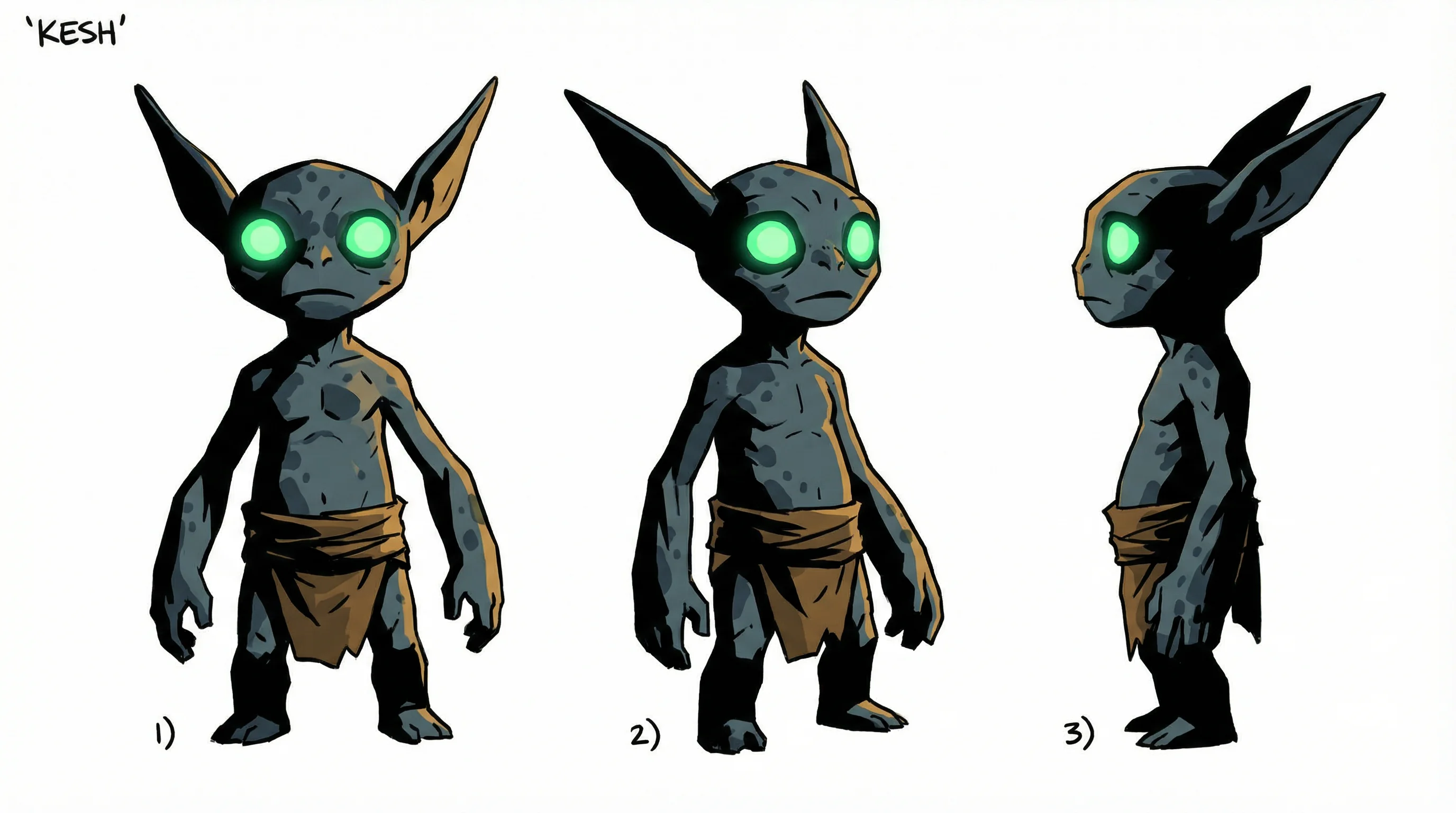
I began with an AI-assisted character sheet generated through Replicate. It gave me a starting point for the dark stone skin, green eyes and worn fabric, but the design still had to survive as a model seen from every angle.
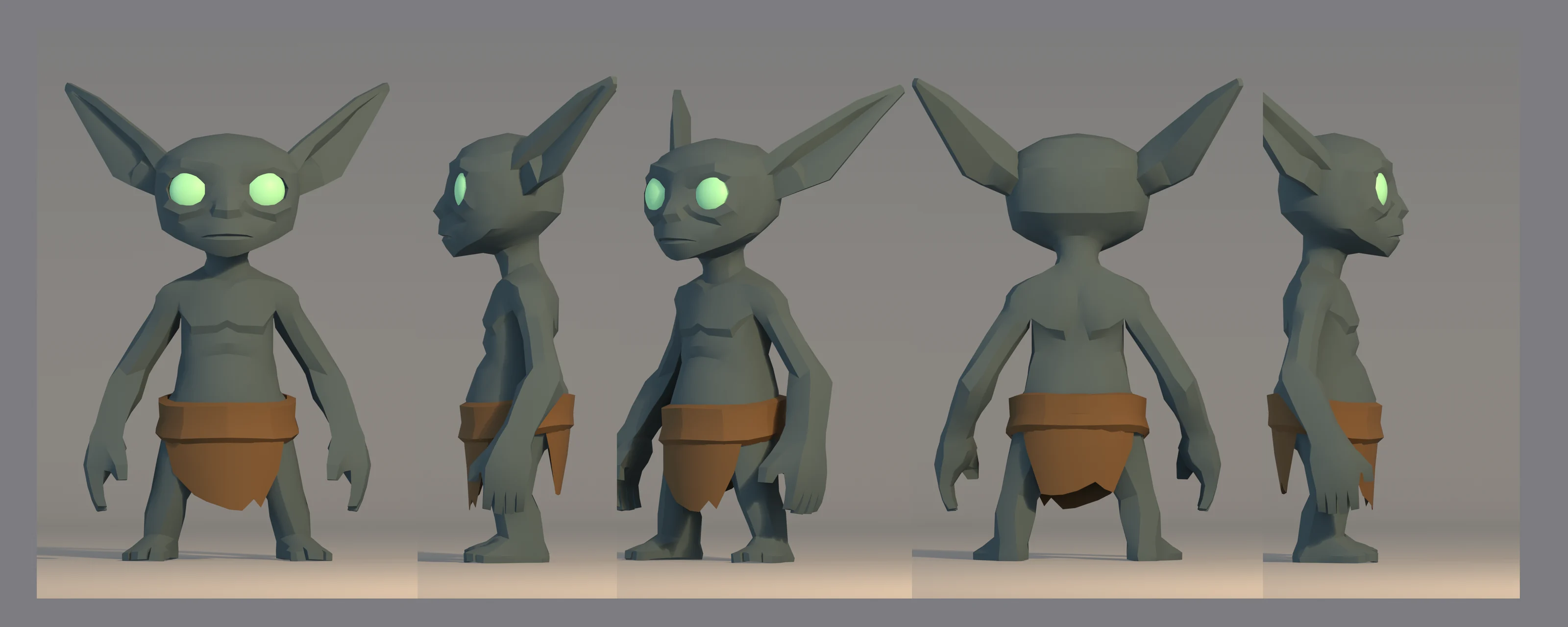
I kept the model low-poly, with a small material palette and marked edges. That made it quick to change while giving the silhouette a faceted look that suited the early direction of Ashenmoor.
Giving myself retakes
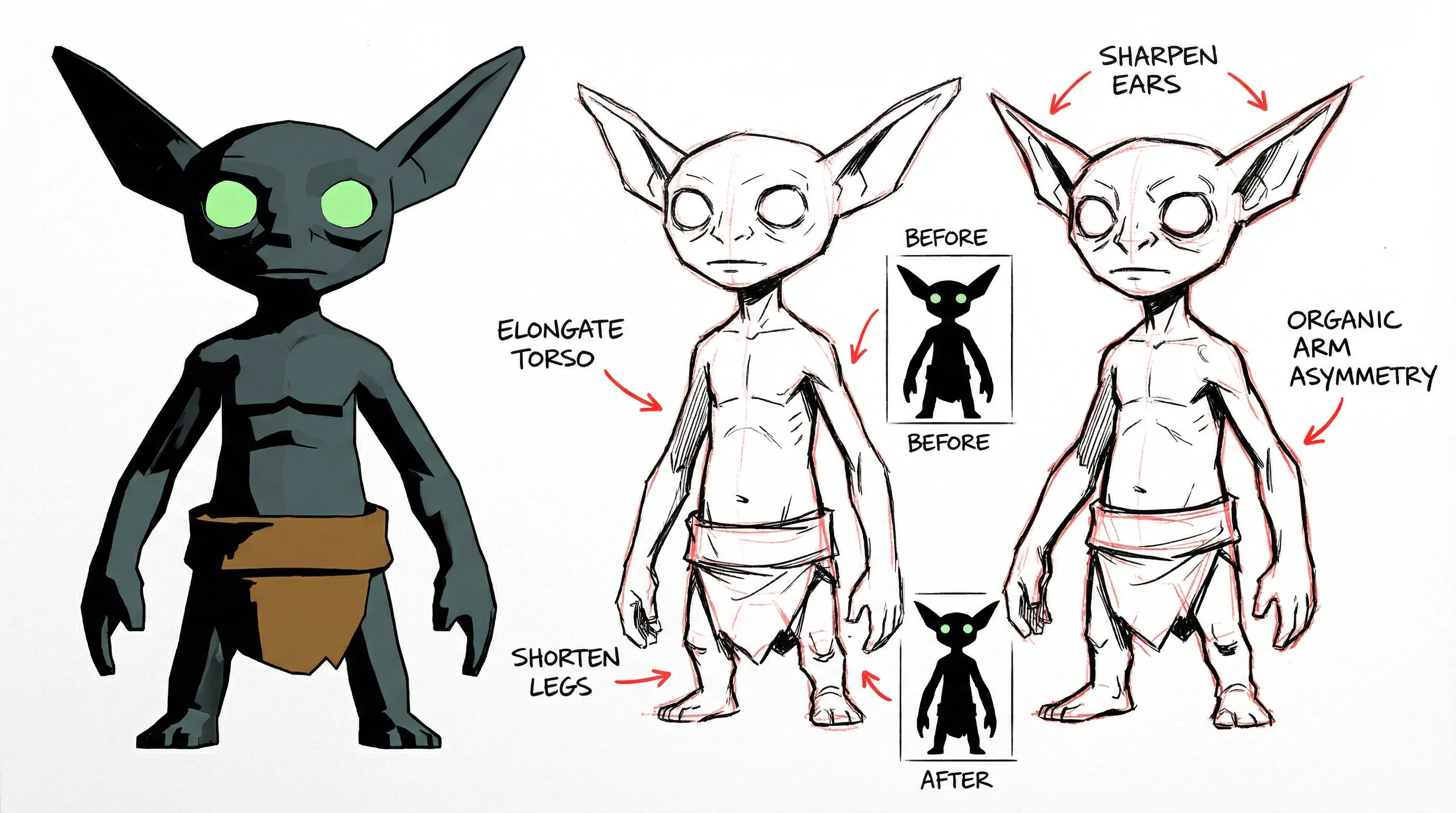
The first model exposed proportion problems that were harder to see in the concept sheet. I generated a painted retake over the render, then used it as a list of changes: lengthen the torso, shorten the legs, refine the ears and add more asymmetry to the arms.
Testing the texture pipeline
Kesh then became one of the first useful tests for Texture Diffusion v2. I projected an AI-generated texture onto the model to see whether the concept-to-model workflow could stay fast without locking the asset too early.
At this point in the project, the next step was to send Kesh into Godot and test the pipeline in a playable scene. This entry stops at that March 2026 milestone; later devlogs will pick up the work once it reached the game.